



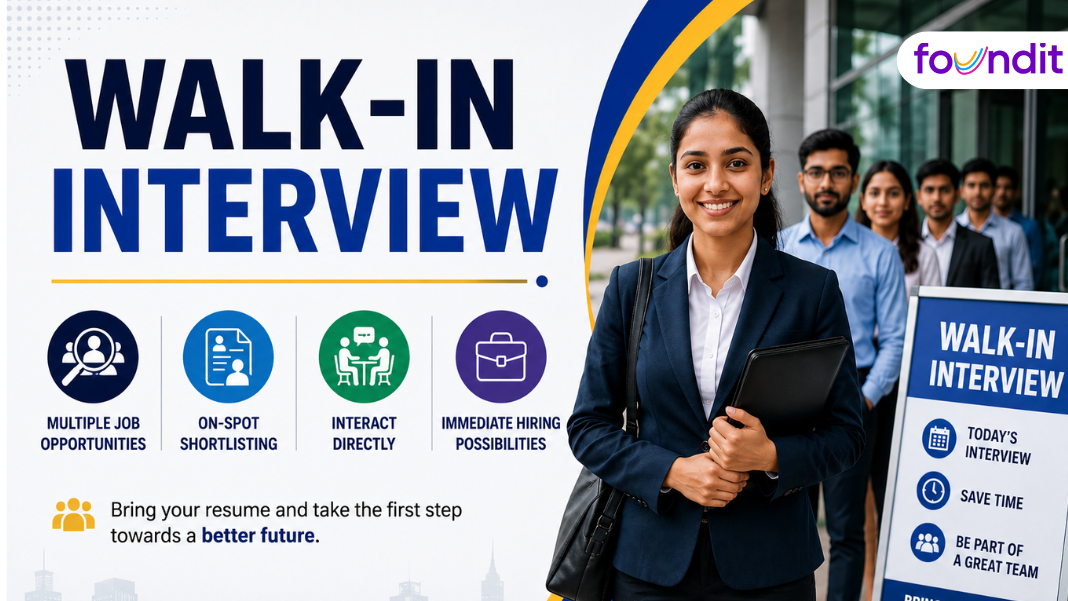
Walk-in interview preparation refers to the process of getting ready for an interview where candidates can directly visit a company without prior notice. It matters because these interviews move fast and require instant readiness.
In simple terms, candidates must be fully prepared before stepping in. There is often no second chance. Many times, decisions happen on the same day.
Walk-in interviews are common across industries. They are widely used for quick hiring. Candidates who prepare well often stand out immediately.
Let’s understand how this works in practice and how to prepare for a walk-in interview with confidence.
What is a Walk-In Interview?
A walk-in interview is a hiring process where candidates can directly visit a company on a specified date and time without prior scheduling.
Companies use this approach when they want to assess candidates quickly and fill roles efficiently.
Key Characteristics:
- No prior appointment required
Candidates can attend interviews without booking slots or waiting for employer confirmation beforehand. This makes the process accessible to many job seekers.
- Fast decision-making process
Recruiters often evaluate candidates and shortlist them on the same day after initial interactions. Final decisions may also happen within hours sometimes.
- High competition levels
Many candidates attend at the same time, which increases competition for available roles significantly. Standing out early becomes very important here.
- Multiple rounds in one visit
Candidates may face HR, technical, and managerial rounds during a single visit itself. This requires sustained focus throughout the process.
How to Prepare for Walk-In Interview
Understanding how to prepare for walk-in interview helps candidates perform better in fast-paced hiring environments.
1. Research the Company Deeply
- Understand the business model and services clearly
Candidates should learn what the company does, how it operates, and its position within the industry. This helps answer role-related questions confidently.
- Review recent updates and achievements carefully
Checking recent company news, projects, and milestones shows awareness and genuine interest in the organisation. Applicants can create a strong and positive impression.
2. Understand the Job Role Clearly
- Analyse job responsibilities in detail
Candidates should carefully review job descriptions to understand daily responsibilities and expectations from the role. Aligning answers becomes easy.
- Prepare relevant examples from experience
Linking past work or academic projects with job requirements improves the quality and relevance of answers. Crafting practical and convincing responses becomes easier.
3. Build a Strong Resume – H3
- Customise the resume based on the role
Resume preparation is the key. Highlight skills and experience relevant to the job carefully. This improves chances of getting shortlisted.
- Ensure clarity and proper structure in the resume
A well-structured resume with clear headings helps recruiters quickly scan and understand key information. It can improve readability and overall impact.
4. Dress and Present Yourself Professionally
- Follow formal dress code
Wearing clean, well-fitted formal clothes creates a professional appearance and builds a strong first impression. This influences how candidates are perceived initially.
- Maintain proper grooming and hygiene
Wearing clean, well-fitted formal clothing and simple presentation ensure that candidates appear organised and attentive to details. Small details create a noticeable impact quickly.
Read Also: How to Dress for a Job Interview
5. Prepare All Documents in Advance
- Organise documents in a proper folder
Applicants should keep resumes, ID proofs, and certificates neatly arranged for easy access during verification. This avoids confusion during the process.
- Carry multiple copies of important documents
Extra copies may be required during different interview rounds or document verification stages. It reflects preparedness and professionalism clearly.
6. Practise Interview Communication
- Improve clarity and structure in responses
Job-seekers should practise answering questions clearly and logically to ensure better understanding during interviews. Confusion and hesitation reduce significantly.
- Work on tone, pace, and confidence while speaking
Speaking with a steady tone and clear pace improves communication effectiveness and overall presence.
7. Plan Logistics and Timing Carefully
- Verify location and travel details in advance
Individuals should check the interview venue, route, and travel time before leaving to avoid delays. Ensuring timely arrival without stress is vital.
- Arrive early and settle comfortably before the interview
Reaching early allows candidates to relax, observe surroundings, and prepare mentally before their turn.
Read Also: Tips to stay focused in Interview
Walk-in Interview Preparation Strategy
A structured job interview preparation strategy helps candidates stay organised and perform consistently throughout the interview process.
Instead of just “ticking boxes”, think of preparation as a way to reduce uncertainty and build confidence step by step.
Before the Interview
1. Organise everything in advance to avoid last-minute stress
Don’t leave things for the morning of the interview. Keep your documents (multiple copies of your CV, ID proofs, certificates) ready the night before. Decide what you’ll wear and ensure it’s clean and appropriate. If the location is unfamiliar, check the route, travel time, and even a backup option.
For example, if your interview is at 10 AM, aim to reach the area by 9:30 AM — this buffer can save you from unexpected delays and helps you settle mentally.
2. Revisit your key talking points and achievements
Many candidates “know” their experience but struggle to explain it clearly under pressure. Spend some time reviewing your projects, achievements, and skills — especially with examples.
Instead of saying “I worked on digital marketing”, be ready to say “I handled social media campaigns and improved engagement by 20% in three months.”
This clarity makes your answers sound more confident and credible.
3. Practise real interview scenarios, not just answers
Rather than memorising answers, try practising how you’ll speak. Say your answers out loud or do a mock interview with a friend. Focus on how you introduce yourself, how you pause, and how you explain things.
For instance, practise answering “Tell me about yourself” in under one minute without sounding rushed or robotic. This helps you sound natural in the actual interview.
4. Prepare mentally for waiting time and possible delays
Walk-in interviews often involve waiting — sometimes for hours. This can drain your energy if you’re not prepared. Carry water, maybe a light snack, and something to keep you calm (like notes or quiet reading).
More importantly, don’t let the waiting time make you anxious. Use it to observe others, revise your thoughts, or simply stay relaxed so that when your turn comes, you’re still fresh and focused.
During the Interview
1. Observe the environment and learn from it
While waiting, notice how the process is being conducted. Are candidates being asked technical questions or more general ones? Is the tone formal or conversational?
This doesn’t mean copying others, but it gives you a sense of what to expect. For example, if you notice interviewers asking follow-up questions on projects, be ready to explain your work in detail.
2. Maintain your energy and focus throughout the process
Walk-in interviews can have multiple rounds, and fatigue can affect how you respond. Sit properly, stay hydrated, and keep your posture confident. Even if your interview is delayed, avoid slouching or appearing disinterested — your body language matters the moment your name is called.
3. Adapt your responses based on the interviewer’s cues
Pay attention to how the interviewer reacts. If they seem interested in a particular topic, expand on it. If they interrupt or move on quickly, keep your answers concise.
For example, if they ask about a project and then ask follow-up questions, it means they want more depth — that’s your chance to stand out by explaining your role clearly.
4. Communicate in a clear and structured way
Instead of giving scattered answers, try to structure your responses. A simple way is: context → action → result.
For instance: “In my previous role (context), I identified low-performing ads and changed the targeting (action), which improved conversions by 15% (result).”
This makes your answers easy to follow and more impactful.
After the Interview
1. Reflect on your performance honestly
Once the interview is over, take a few minutes to think about how it went. Which questions did you answer well? Where did you hesitate?
This isn’t about being critical — it’s about learning. For example, if you struggled with a technical question, you now know exactly what to improve for the next opportunity.
2. Stay available and responsive for further rounds
Some companies move quickly, especially in walk-in drives. You might be asked to stay back for another round or return the next day. Being flexible and reachable (phone/email) increases your chances of progressing further.
3. Track your interviews and learn from patterns
If you’re attending multiple walk-in interviews, keep a simple record — company name, role, questions asked, and your performance. Over time, you’ll start noticing patterns.
For example, if several companies ask similar questions and you struggle with them, that’s a clear area to improve. This habit turns every interview into a learning experience.
Overall, the goal is not just to “prepare answers” but to build confidence, clarity, and adaptability. A thoughtful strategy makes a noticeable difference.
Common Walk-In Interview Questions and Answers
Preparing common questions improves performance.
1. Tell me about yourself
This is usually the first question, and it sets the tone for the entire interview. Instead of giving your full life story, focus on a clear and structured summary of your background. The idea is to help the interviewer quickly understand who you are professionally.
Start with your education, then briefly move to your experience, and finally highlight a couple of key skills or areas you’re interested in. Try to keep it relevant to the job you’re applying for — avoid unnecessary personal details.
A good answer should feel like a short introduction, not a speech. Practising it helps you stay confident and avoid rambling.
Example:
“I’m a marketing graduate with one year of hands-on experience in digital campaigns, where I worked on social media and performance marketing. In my previous role, I was responsible for analysing campaign data and optimising ads, which helped improve engagement by around 20%.
I enjoy working with data and creative strategy, and I’m now looking to grow in a role where I can contribute to larger campaigns and continue building my analytical skills.”
2. Why do you want this job?
Interviewers ask this to check whether you’re genuinely interested or just applying randomly. A strong answer should show that you’ve understood the role and made an effort to learn about the company.
Instead of giving a generic reply, connect your skills and experience with what the job requires. You can also briefly mention something specific about the company — such as its work, growth, or approach — to show that you’ve done your research.
The goal is to show that this role makes sense for you, both in terms of what you can contribute and what you want to learn.
Example:
“This role aligns well with my experience in digital marketing and data analysis. I’m particularly interested in how your company focuses on data-driven decision-making and innovative campaigns.
I see this as a great opportunity to apply my skills while learning from a fast-growing team and contributing to meaningful projects.”
3. What are your strengths?
This question is your chance to highlight what you’re good at, but simply listing strengths is not enough. You should focus on skills that are relevant to the job and briefly show how you’ve used them in a real situation.
Pick two or three strengths and explain them clearly instead of trying to mention too many. This makes your answer more convincing and easier to follow.
Think about strengths that actually add value in a workplace, such as problem-solving, communication, adaptability, or teamwork.
Example:
“One of my key strengths is problem-solving — in my previous role, I identified underperforming ads and adjusted targeting, which improved conversion rates. I’m also a strong communicator, which helps when working with teams or presenting ideas.
Additionally, I adapt quickly to new tools and environments, which allows me to stay productive even in fast-paced settings.”
4. What are your weaknesses?
This is not a trick question, but it does test your honesty and self-awareness. Avoid saying something unrealistic like “I have no weaknesses” or giving an answer that sounds fake.
Instead, mention a genuine area where you’ve faced challenges, and more importantly, explain what you’re doing to improve it. This shows that you’re willing to learn and grow.
Keep the tone balanced — don’t make the weakness sound too serious, but don’t dismiss it either.
Example:
“I used to spend too much time perfecting small details, which sometimes slowed me down. However, I’ve been working on prioritising tasks better and setting time limits for each activity. This has helped me balance quality with efficiency.”
5. Why should we hire you?
This question is about clearly communicating your value. The interviewer wants to understand what makes you a good fit compared to other candidates.
Focus on how your skills, experience, and attitude match the role. You don’t need to sound overconfident — just explain how you can contribute and how quickly you can adapt.
It also helps to mention your willingness to learn, especially if you’re early in your career.
Example:
“You should hire me because I bring a combination of relevant skills and a proactive attitude. I already have experience in digital campaigns and data analysis, so I can contribute from the start.
At the same time, I’m eager to learn and take feedback, which helps me improve quickly and add more value over time.”
6. Are you willing to work flexible hours?
This question is not just about saying “yes” — it’s about showing that you understand the nature of the role. Many jobs, especially in operations, sales, or marketing, may require flexibility during deadlines or busy periods.
A good answer should show that you’re open and practical, but also aware of how to manage your time. Employers want someone who is reliable and can adapt when needed without losing productivity.
Avoid sounding too rigid or too casual — aim for a balanced response.
Example:
“Yes, I’m open to flexible working hours when required. I understand that some roles demand adaptability, especially during deadlines or campaigns, and I’m comfortable adjusting my schedule to meet team goals.
I’m willing to adapt in those cases to ensure the work is completed effectively and the team meets its goals.”
7. What are your salary expectations?
This question can feel tricky, but the goal is to handle it professionally without sounding either too demanding or unsure.
It’s helpful to have a basic idea of the market range for your role, but you don’t always need to give a fixed number. Instead, show that you’re flexible and reasonable, while also valuing your skills.
You can also shift the focus slightly towards learning and growth, especially if you’re early in your career. This shows maturity and long-term thinking.
Example:
“I’m open to a fair and competitive salary based on industry standards, the responsibilities of the role, and the overall compensation package. At this stage, my priority is to find a role where I can learn, contribute, and grow professionally. I’m confident we can arrive at a mutually agreeable figure.”
Read Also: Top 50 basic Interview Questions and Answers
How to Handle Group Walk-In Interviews
Some walk-in interviews include group discussions or team-based activities for candidate evaluation. Good interview skills are vital to succeed in them.
- Participate actively while respecting others
Candidates should share ideas while allowing others to contribute without interruption during group discussions. Balanced participation is important here.
- Show teamwork and collaboration skills clearly
Supporting others while expressing ideas shows strong teamwork and collaboration abilities during group tasks. Recruiters value cooperation highly.
- Maintain clarity and confidence while speaking
Clear communication helps candidates express ideas effectively and ensures better visibility in group settings. Confidence improves overall presence noticeably.
Read Also: Group Interview: How to impress everyone
Industry-Specific Preparation Tips
Different industries expect candidates to demonstrate different skills and approaches during interviews.
- IT and technical roles
Candidates should focus on technical knowledge, logical thinking, and problem-solving ability relevant to the role. Practical examples strengthen responses.
- Sales and marketing roles
Strong communication, persuasion ability, and confidence are essential for success in such roles. Confidence influences outcomes significantly.
- Customer service roles
Candidates should demonstrate patience and ability to handle various customer situations calmly and effectively. Communication clarity remains essential here.
How Recruiters Evaluate Candidates in Walk-In Interviews
Understanding evaluation criteria helps candidates prepare more effectively for walk-in interview in different situations.
- Communication clarity and confidence during interaction
Recruiters observe how clearly candidates express ideas and respond to questions during the interview. Structured answers create better impressions.
- Professional attitude and behaviour throughout the process
Positive behaviour and respectful communication influence how candidates are perceived by recruiters during interviews. This impacts final decisions significantly.
- Role fit and alignment with required skills
Candidates are assessed based on how closely their skills match the requirements of the role applied for. Relevant experience improves selection chances.
- Adaptability and willingness to learn new skills
Recruiters prefer candidates who can adapt quickly and learn new skills in changing environments. This supports long-term growth potential.
- Problem-solving ability and logical thinking
Candidates are evaluated on how effectively they approach challenges and solve problems logically. Logical thinking is highly valued here.
- Consistency across all interview rounds
Performance across multiple rounds is considered while making final hiring decisions for candidates. Consistency reflects reliability and stability.
- Body language and overall presentation style
Non-verbal communication such as posture and eye contact influences recruiter perception during interviews. These reflect confidence and professionalism.
Tips to Stand Out in Walk-In Interviews
Many candidates attend walk-in interviews. Thus, standing out requires extra effort.
1. Be Clear and Concise
Keep answers short and direct. Avoid long explanations.
2. Show Confidence
Confidence creates a positive impression. Maintain good posture and eye contact.
3. Highlight Practical Experience
Even small projects matter. Explain what you did and learned.
4. Ask Smart Questions
Ask about:
- Role responsibilities
- Growth opportunities
This shows interest.
5. Follow Instructions Carefully
Some interviews include written tests or tasks. Read instructions properly before starting.
Why Walk-In Interviews are Increasing
Here are the key reasons why these interviews are widely used:
- Companies often have urgent hiring needs and prefer candidates who can join quickly. Walk-in interviews help fill these roles without delay.
- Traditional hiring processes take time due to multiple rounds and waiting periods. Walk-ins make the process faster by combining steps.
- Many job seekers prefer quicker results instead of waiting weeks for responses. Walk-in drives allow direct interaction and faster decisions.
- Recruiters can assess communication, confidence, and behaviour in person, which improves overall evaluation and supports interview readiness.
- Some industries need to hire many employees in a short time. Walk-ins make bulk hiring easier and more efficient.
- Automated systems may reject suitable candidates due to resume formatting or missing keywords. Walk-ins reduce this issue through direct interaction.
- Walk-in drives attract many candidates, which increases awareness about the company and its job opportunities.
- They also help reach candidates who are not actively applying but are open to new opportunities.
Conclusion
Walk-in interview preparation is essential for success in fast-paced hiring environments. These interviews involve quick decisions and high competition, requiring strong preparation and clear communication.
Candidates who understand expectations and prepare well perform better under pressure. Small factors like punctuality and body language create a strong impact quickly.
Walk-in interviews test readiness and professionalism within limited time. With consistent effort and the right mindset, candidates can improve outcomes and move forward confidently.
FAQs
Preparation includes researching companies and practising interview questions before attending walk-in interview processes. This improves clarity and confidence significantly.
The 30-60-90 rule in an interview refers to a structured way of explaining what you plan to achieve in your first 30, 60, and 90 days in a new job.
The golden rule is to maintain professionalism, punctuality, and a positive attitude throughout. Asking thoughtful questions and following up reflects strong professional behaviour.
Walk-in interviews assess skills, experience, and suitability for the role directly. Questions focus on resume, background, motivation, and situational responses.
The 5 C's include Competence, Confidence, Communication, Character, and Culture. They help recruiters evaluate candidates across essential performance areas.
 Beware of Scammers
