





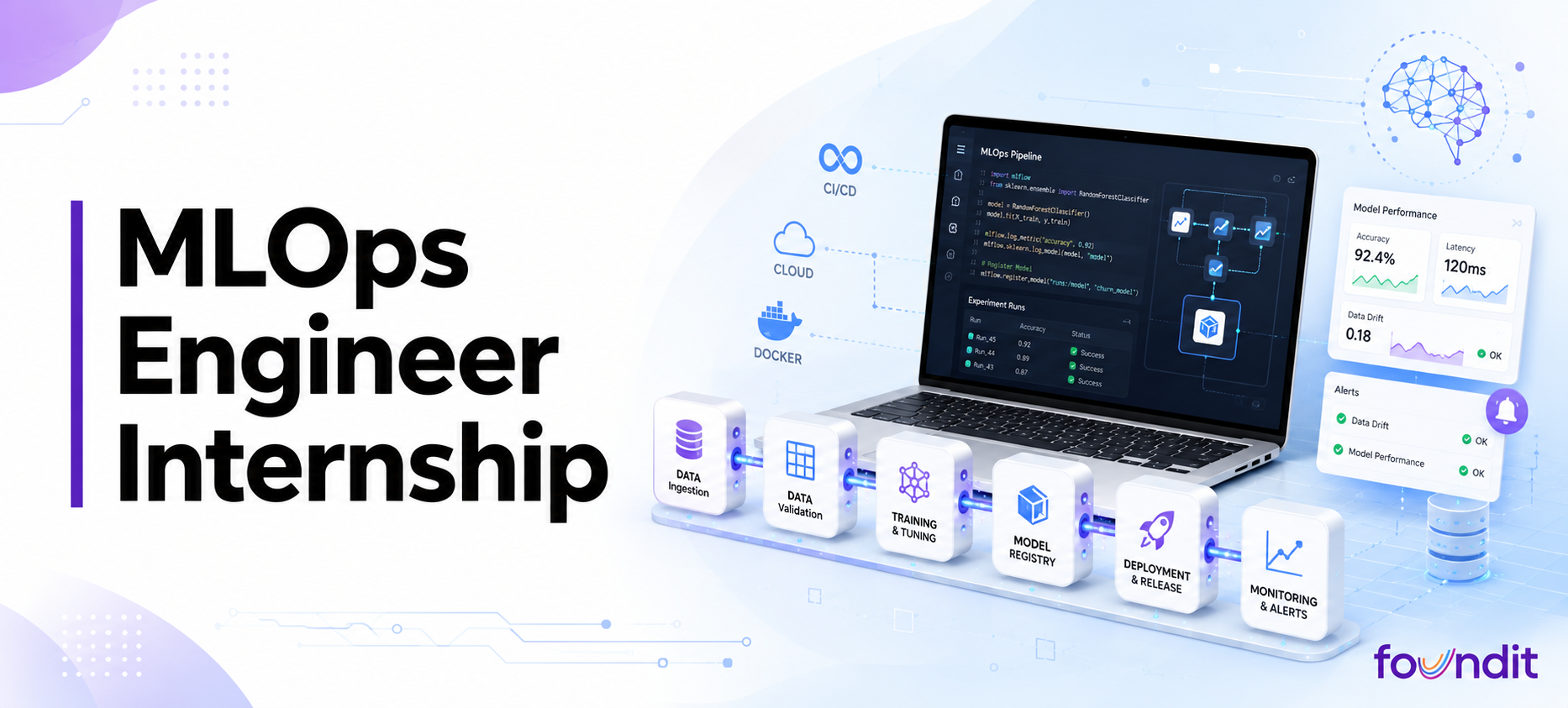
A MLOps Engineer Internship 2026 helps students and freshers gain practical experience in managing machine learning models through development, deployment, and monitoring processes.
These internships introduce candidates to the tools and practices used to move AI solutions from experiments into production environments.
According to 2026 AI industry trends, more than 45% of enterprises are increasing investments in AI deployment and automation capabilities.
A MLOps Engineer Internship helps candidates develop skills in model operations, cloud platforms, and automation while preparing for careers in AI engineering.
About MLOps Engineer Internship
A MLOps Engineer Internship provides exposure to managing machine learning pipelines, automating model deployment, and supporting AI development teams.
Interns work with data workflows, cloud platforms, version control systems, and monitoring solutions to improve model performance.
Companies such as Google, Microsoft, Amazon Web Services, IBM, TCS, Accenture, Infosys, NVIDIA, Deloitte, and HCLTech hire MLOps engineer interns for AI infrastructure and machine learning projects.
These internships help candidates understand model lifecycle management, deployment practices, and collaboration between data science and engineering teams.
Interns can also develop their MLOps Engineer skills by working on practical AI operations tasks.
Top Companies Offering MLOps Engineer Internships
Below is the list of popular companies offering MLOps Engineer Internships in 2026:
| Company | Skills Required | Indicative Stipend (₹/Month) |
|---|---|---|
| Machine learning, Kubernetes, cloud platforms | ₹30,000 – ₹80,000 | |
| Microsoft | Azure ML, Python, model deployment | ₹25,000 – ₹70,000 |
| Amazon Web Services | AWS, ML pipelines, automation | ₹25,000 – ₹70,000 |
| IBM | AI workflows, Python, data engineering | ₹20,000 – ₹50,000 |
| TCS | Machine learning, DevOps, cloud tools | ₹10,000 – ₹35,000 |
| Accenture | AI deployment, automation, cloud solutions | ₹15,000 – ₹45,000 |
| Infosys | ML operations, scripting, databases | ₹10,000 – ₹35,000 |
| NVIDIA | Deep learning, GPU computing, AI systems | ₹30,000 – ₹80,000 |
| Deloitte | AI solutions, data pipelines, analytics | ₹15,000 – ₹45,000 |
| HCLTech | Cloud infrastructure, ML systems, testing | ₹12,000 – ₹40,000 |
Disclaimer: Stipend ranges are indicative and may vary based on the internship role, location, team, and recruitment cycle. Companies may update internship structures and compensation from time to time.
Eligibility
Candidates applying for a MLOps Engineer Internship in 2026 may need to meet the following requirements:
- Students pursuing computer science, artificial intelligence, data science, or related courses can apply.
- Understanding Python programming and machine learning concepts is preferred.
- Knowledge of MLOps Engineer skills such as model deployment, automation, and cloud workflows is beneficial.
- Familiarity with Linux, databases, APIs, and software development practices is useful.
- Candidates with machine learning projects or cloud-based implementations may receive preferences.
- Basic understanding of DevOps tools and containerisation concepts can support learning.
- Completing MLOps Engineer certification courses can improve technical profiles.
Roles and Responsibilities
- Help build and maintain machine learning pipelines.
- Assist with deploying trained models into testing environments.
- Monitor model performance and identify operational issues.
- Work with cloud platforms for AI application management.
- Support automation of repetitive machine learning workflows.
- Manage code versions and maintain project repositories.
- Assist in preparing data pipelines for model training activities.
- Collaborate with data scientists and software engineers.
- Document deployment processes and technical workflows.
- Learn MLOps Engineer tools used for managing AI systems.
Application Process
Candidates can follow these steps to apply for MLOps internship opportunities.
- Search for MLOps Engineer internships on company websites and career platforms.
- Review technical requirements and preferred qualifications.
- Prepare a resume highlighting AI, programming, and cloud knowledge.
- Add machine learning projects, coding portfolios, or certifications.
- Submit applications through online recruitment portals.
- Complete technical assessments related to programming or ML concepts.
- Attend interviews with AI and engineering teams.
- Complete onboarding requirements after selection.
Benefits & Perks
A MLOps Engineer Internship may offer the following benefits:
- Gain practical experience with machine learning deployment workflows.
- Receive guidance from AI engineers and cloud professionals.
- Learn industry practices for managing ML applications.
- Build a portfolio featuring AI infrastructure projects.
- Improve understanding of automation and cloud technologies.
- Develop connections with professionals in AI engineering teams.
- Receive an internship certificate after successful completion.
- Improve chances of receiving a pre-placement offer (PPO).
- Prepare for future MLOps Engineer jobs with practical experience.
FAQs
Many MLOps Engineer Internship opportunities offer stipends based on company policies, project requirements, candidate skills, and internship duration.
Yes, freshers can apply if they have knowledge of programming, machine learning basics, and software development concepts.
Candidates should understand Python, machine learning workflows, cloud platforms, automation, and deployment practices. Knowledge of MLOps Engineer tools can improve technical understanding.
Most MLOps Engineer Internships last between three and six months, depending on project requirements and organisational structure.
A MLOps Engineer Internship can improve career prospects by providing experience in AI operations. Some companies may offer full-time opportunities based on performance.
Industries such as technology, finance, healthcare, retail, and research hire MLOps interns for AI application development and deployment.
No, an advanced degree is not always required. Candidates with practical skills, projects, and MLOps Engineer certification can apply.
The stipend depends on the organisation, location, internship duration, and technical expertise expected for the role.
Yes, final-year students can apply to gain industry exposure and practical knowledge of AI deployment processes.
Yes, some organisations offer remote or hybrid options where interns can collaborate with AI teams using online platforms.
Some companies provide PPO opportunities after reviewing an intern’s technical contribution, project performance, and learning progress.
GPA may be considered, but technical skills, machine learning projects, programming ability, and problem-solving experience are important selection factors.
 Beware of Scammers
