






Event management courses after 12th are professional programmes that teach students how to plan, organise, and manage different types of events. These events may include weddings, corporate events, exhibitions, conferences, concerts, festivals, and social gatherings.
As businesses and individuals continue to invest in events and experiences, career opportunities in event management are expanding across multiple sectors.
Event management courses are available at Diploma, Undergraduate, Postgraduate, and Doctoral levels. These courses are offered through both online and offline modes. Students looking for shorter training can also pursue Certificate in Event Management courses instead of full-time programmes.
This article explains about the event management courses after 12th, their eligibility criteria, different types of courses, and a lot more.
What Are Event Management Courses?
Event management courses provide knowledge and training on managing events from concept planning to successful execution and completion. They include planning, coordination, marketing, budgeting, and client servicing.
The courses are designed to develop organisational, communication, and problem solving skills to have a good career after 12th. This makes sure that the students are ready to face the real time problems in the execution of events.
Key Highlights
| Aspect | Details |
| Duration | 6 months to 3 years (certificate, diploma, degree) |
| Mode | Full-time / part-time / online |
| Structure | Theory + practical training + internships |
| Outcome | Skills in planning, coordination, and execution |
These programmes combine classroom learning with practical exposure, making them industry oriented.
Read Also: Management Explained: What It Is, What Managers Do & Why It Matters
Why Choose Event Management Courses After 12th?
It is appropriate to choose event management courses after 12th exam for students who tend to prefer dynamic, people-oriented, and creative career. The profession demands planning and execution skills.
It is flexible because the professionals may work in a corporate capacity, work as a freelance worker, or even establish their own event management company.
Key Reasons
| Reason | Explanation |
| Creative Career Path | Involves designing themes, concepts, and experiences |
| High Industry Demand | Growing demand in weddings, corporate events, and entertainment |
| Practical Learning | Focus on real-world projects and internships |
| Career Flexibility | Options in jobs, freelancing, or entrepreneurship |
| Networking Opportunities | Interaction with clients, vendors, and industry professionals |
Read Also: Management Skills: Concepts, Importance, and Tips
Types of Event Management Courses After 12th
Event management courses after 12th are provided at various levels to suit different career objectives, time at disposal and level of learning.
Various kinds of courses are centred around the level of expertise, either being focused on a basic skill-building course or being a highly advanced strategic planning professional course.
Understanding the different types of event management courses is important because your choice can influence your career path, job roles, skill development, and long-term growth in the event management industry.
Read Also: Event Management: People behind Glamour
Certificate Courses in Event Management
Event management certificate courses are short-term programmes that aim at providing students with the fundamentals of event planning and execution. The courses can be used by beginners who desire to be exposed to the industry at a rapid rate.
They concentrate on the practical skills, including coordination, client handling, and the basic event logistics. These courses are commonly preferred by students to begin freelancing or to support senior event planners.
| Aspect | Details |
| Key Features | Duration: 3–6 months; short-term and skill-focused; quick entry into the industry |
| What You Learn | Basics of event planning, client handling, vendor coordination, budgeting fundamentals |
| Use Case | Suitable for students who want to start freelancing or assist in small events like birthdays, local functions |
Diploma in Event Management
The diploma in event management provides a more systematic and elaborate knowledge than certificate programmes. It covers both theoretical concepts and practical training, helping students build a stronger understanding of event planning and execution.
This course will be appropriate for students who wish to develop a stable ground before joining full-time employment in event companies.
| Aspect | Details |
| Key Features | Duration: 6–12 months; structured learning; balanced theory and practical exposure |
| What You Learn | Event planning, marketing, budgeting, logistics management, coordination skills |
| Use Case | Ideal for students aiming for entry-level roles like event coordinator in companies |
Advanced Diploma in Event Management
Advanced diploma courses are designed for deeper learning and industry readiness. They focus on complex event planning, large-scale execution, and strategic management.
These programmes often include internships, live projects, and case studies, which improve real-world understanding.
| Aspect | Details |
| Key Features | Duration: 1–2 years; in-depth training; includes internships and live projects |
| What You Learn | Large-scale event execution, risk management, sponsorship handling, client servicing |
| Use Case | Best for students targeting professional roles in corporate events, exhibitions, large weddings |
Bachelor’s Degree in Event Management (BA/BBA)
A bachelor’s degree in event management is a comprehensive programme that combines event planning with business management principles. It is ideal for students looking for long-term career growth.
The course covers strategic planning, marketing, finance, and operations, making it suitable for leadership roles in the future.
| Aspect | Details |
| Key Features | Duration: 3 years; comprehensive programme; combines event management with business studies |
| What You Learn | Event production, marketing, finance, public relations, operations management |
| Use Case | Suitable for students aiming for long-term careers, managerial roles, or starting their own event business |
Specialised Event Management Courses
Specialised event management courses focus on specific segments within event management, allowing students to develop niche expertise. These are often short to medium-term programmes.
They are useful for students who already know their area of interest within the event industry. Specialised courses help in building expertise in high-demand niches, improving career focus and earning potential.
| Aspect | Details |
| Key Features | Duration: varies; niche-focused learning; industry-specific training |
| What You Learn | Skills related to specific domains like wedding planning, corporate events, sports events |
| Use Case | Ideal for students who already know their interest area and want to specialise in that segment |
Online Event Management Courses
Online event management courses provide flexible learning options for students who cannot attend full-time classes. They are increasingly popular due to accessibility and convenience.
These courses often include recorded lectures, assignments, and virtual projects. Some platforms also offer certification recognised by industry professionals.
| Aspect | Details |
| Key Features | Flexible duration; online mode; accessible from anywhere |
| What You Learn | Event basics, digital event tools, virtual event planning |
| Use Case | Suitable for students or working individuals who want flexible learning alongside other commitments |
Entrance Exams for Event Management Courses
Entrance exams for event management courses are not always mandatory at the undergraduate level. In many cases, students can get direct admission based on Class 12 marks.
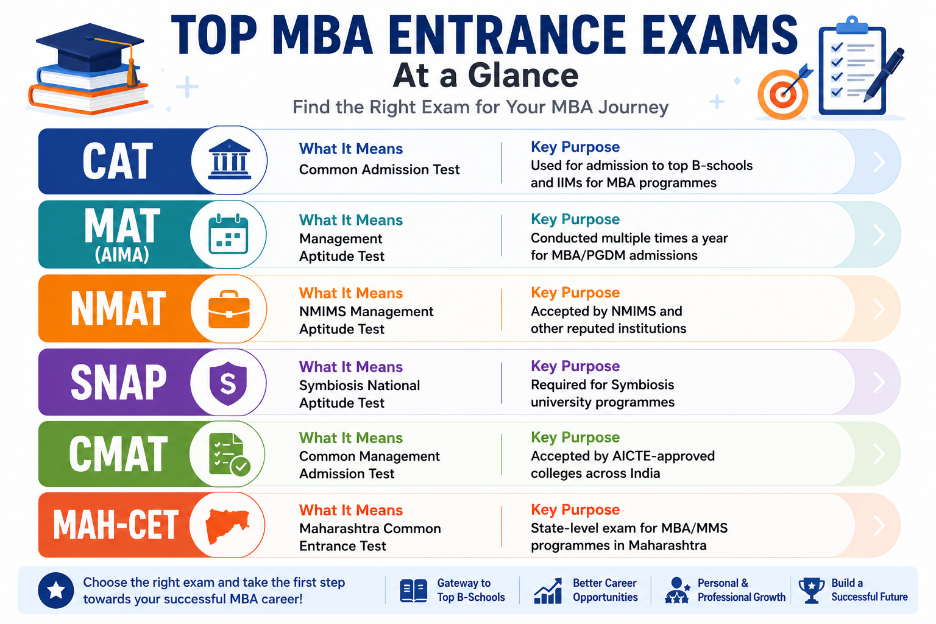
If someone is planning to move into management-focused programmes later, especially an MBA in Event Management or related fields, these exams become relevant. Basically, they act as a gateway to top institutes.
Many students first complete a diploma or bachelor’s degree and then appear for these exams to move into higher-level roles.
Common Entrance Exams
| Exam | What It Means | Key Purpose |
| CAT | Common Admission Test | Used for admission to top B-schools and IIMs for MBA programmes |
| MAT (AIMA) | Management Aptitude Test | Conducted multiple times a year for MBA/PGDM admissions |
| NMAT | NMIMS Management Aptitude Test | Accepted by NMIMS and other reputed institutions |
| SNAP | Symbiosis National Aptitude Test | Required for Symbiosis university programmes |
| CMAT | Common Management Admission Test | Accepted by AICTE-approved colleges across India |
| MAH-CET | Maharashtra Common Entrance Test | State-level exam for MBA/MMS programmes in Maharashtra |
How These Exams Connect to Event Management
At first glance, these exams may not seem directly related to event management. But here’s where it matters.
Event management at a higher level is not just about organising events. It also involves business strategy, client management, branding, and operations. That is exactly where MBA programmes come in.
So, many times, students use these exams to move from execution-level roles to managerial or leadership positions in the event industry.
When Should You Consider These Exams?
Not every student needs to prepare for these exams immediately after 12th. In fact, many don’t. It becomes relevant if you are planning for:
- MBA after a B.Sc. or event management degree
- Moving into corporate or large-scale event roles
- Building a long-term career in the event business or entrepreneurship
Worth noting, early awareness helps. Even if you don’t appear now, knowing the pathway makes planning easier later.
Event Management Salary – Experience Wise
The salary after pursuing event management courses after 12th largely depends on experience, as earnings typically increase with practical exposure and expertise in managing different types of events.
This matters because, in this field, hands-on experience often carries more weight than just qualifications.
Someone who has managed multiple events, especially large-scale ones, tends to earn significantly more than a fresher. Clients and companies usually prefer professionals who can handle pressure and deliver smoothly.
Salary Based on Experience
| Years of Experience | Estimated Average Annual Salary |
| 0 – 2 years | ₹2.5 – ₹4 LPA |
| 3 – 5 years | ₹4 – ₹7 LPA |
| 6 – 10 years | ₹7 – ₹12 LPA |
| 11 – 15 years | ₹12 – ₹18 LPA |
| 15+ years | ₹18 – ₹25+ LPA |
Worth noting, freelance event planners with strong networks can sometimes earn more than salaried professionals at the same level.
Event Management Salary – Designation Wise
Salary in event management also depends heavily on the role or designation. Different positions involve different levels of responsibility, which directly affects pay. Some positions focus on planning, while others are more execution driven.
Salary By Job Role
| Job Profile | Job Responsibilities | Average Annual Salary |
| Event Manager | Plans, organises, and oversees complete event execution | ₹4 – ₹10 LPA |
| Event Coordinator | Handles on-ground operations and ensures smooth execution | ₹3 – ₹6 LPA |
| Wedding Planner | Manages wedding events, vendors, and client expectations | ₹4 – ₹9 LPA |
| Corporate Event Manager | Handles business events, conferences, and brand events | ₹6 – ₹12 LPA |
| Event Logistics Manager | Manages venue setup, equipment, and technical arrangements | ₹3.5 – ₹8 LPA |
Basically, roles that involve client handling and decision-making tend to pay more over time.
Event Management Salary – Education Qualification Wise
Education level also plays a role in salary, although in this field, skills and experience gradually become more important. Still, starting qualifications can influence entry-level pay and initial opportunities.
Many times, students start with a diploma or degree and then build their careers through experience.
Salary Based on Qualification
| Qualification | Course Duration | Average Starting Salary |
| Diploma in Event Management | 6 months – 1 year | ₹2 – ₹3.5 LPA |
| Bachelor’s Degree (BA/BBA Event Management) | 3 years | ₹3.5 – ₹5 LPA |
| Postgraduate Course / MBA | 2 years | ₹5 – ₹8 LPA |
Event Management Salary – Location Wise
Location is another factor that affects the salary structure in event management. Metro cities usually offer higher pay due to larger events, higher budgets, and more corporate demand.
At the same time, smaller cities may offer fewer opportunities, but competition is also lower.
Salary Based on Location
| City | Average Annual Salary |
| Mumbai | ₹4.8– ₹5.5 LPA |
| Delhi NCR | ₹5 – ₹7 LPA |
| Bangalore | ₹5 – ₹7 LPA |
| Chennai | ₹3.5 – ₹5 LPA |
| Kolkata | ₹3.5 – ₹5.5 LPA |
Cities with strong corporate presence and active event industries tend to offer better earning potential.
Disclaimer: The salary ranges mentioned above are approximate and may vary based on factors such as location, company, individual skills, educational background, and market demand. These figures are indicative of entry-level roles and should not be considered guaranteed compensation.
Event Management Jobs After 12th
Event management jobs after 12th refer to the various career opportunities available in the event industry after completing a relevant course or training programme. These job roles involve planning, organising, and managing different types of events such as weddings, corporate functions, exhibitions, and concerts.
The industry also values strong communication, organisation, and problem-solving skills for handling real-time event challenges. Professionals may work with agencies, corporates, or independently depending on their experience level.
It has grown into a structured industry that includes corporate events, large weddings, brand activations, and exhibitions. That shift has created steady job opportunities with practical career growth.
Many times, students start with entry-level roles and gradually move into managerial positions as they gain experience. The progression is quite visible in this field.
Top Job Profiles in Event Management
| Job Profile | Job Description |
| Event Planner | Plans the event idea, budget, theme, and vendors. Turns concepts into a clear working plan. |
| Event Manager | Takes full responsibility for the event. Manages planning, team coordination, and final execution. |
| Business Development Executive | Finds new clients and generates business. Focuses on pitching services and building contacts. |
| Wedding Planner | Manages all wedding arrangements such as venue, décor, catering, and logistics within budget. |
| Event Coordinator | Works on-site to ensure all activities run on schedule and operations run smoothly. |
| Event Accounts Manager | Handles budgeting, cost control, and financial planning for events. |
| Event Marketing Manager | Promotes events through marketing campaigns, branding, and audience outreach. |
| Sponsorship Manager | Gets sponsors and partners. Negotiates deals and maintains sponsor relationships. |
| Public Relations (PR) Executive | Manages media coverage, press communication, and event publicity. |
| Production Manager | Looks after technical setup such as stage, lighting, and sound. |
| Venue Manager | Manages venue booking, preparation, and operations before and during events. |
| Celebrity or Talent Manager | Coordinates with performers, artists, or speakers. Handles schedules and contracts. |
| Exhibition Manager | Plans and manages exhibitions, trade shows, and large public events. |
| Logistics Manager | Handles transport, equipment movement, and overall event logistics. |
| Social Media Manager (Events) | Manages live updates, posts, and audience engagement during events. |
| Event Operations Manager | Coordinates teams, vendors, and timelines for smooth execution of events. |
| Event Designer | Designs the theme, décor, and overall look and feel of the event. |
| Vendor Manager | Finds and manages vendors. Handles contracts and coordination. |
| Hospitality Manager | Manages guest services, accommodation, and overall guest experience. |
| Registration Manager | Handles registrations, ticketing, and attendee data. |
| Event Technology Specialist | Manages event software, virtual platforms, and digital tools. |
| Content Manager (Events) | Plans event agenda, scripts, and speaker flow. |
| Stage Manager | Manages backstage work and ensures smooth event timing. |
| Safety and Compliance Officer | Ensures safety rules, permissions, and legal requirements are followed. |
| Freelance Event Consultant | Works independently and advises clients on event planning and execution. |
| Event Company Owner or Entrepreneur | Runs and manages an independent event management business. |
The job responsibilities often overlap, especially in smaller teams where one person may handle multiple responsibilities. Over time, professionals tend to specialise based on their strengths.
Read Also: People Management Skills
Event Management Courses After 12th Eligibility
Event management courses after 12th eligibility refers to the basic academic requirements needed to enter different types of programmes. The structure is relatively simple, which is one reason this field remains accessible to students from all streams.
That said, institutes don’t rely only on marks. Many times, they look at communication ability, interest in events, and overall personality especially for advanced programmes.
Eligibility Criteria Table
| Course Name | Eligibility Criteria |
| Certification Courses | Completion of 10+2 in any stream from a recognised board |
| Diploma in Event Management | 10+2 with around 45%–55% aggregate marks |
| Advanced Diploma | 10+2 with qualifying marks; sometimes basic exposure is preferred |
| BA/BBA/BMS in Event Management | Class 12 with approximately 50%–55% marks |
| MA/MBA in Event Management | Bachelor’s degree with around 55%–60% marks |
Some institutes may also conduct personal interviews or aptitude assessments, especially for degree and postgraduate programmes.
Overall, the eligibility structure remains straightforward, allowing students to enter the field early and build their careers gradually through experience.
Read Also: Types of Communication: When to Use, How to Improve
Selection Process for Event Management Courses
The selection process for the event management courses after 12th goes beyond eligibility. It is where institutes try to understand whether a candidate is actually suited for the field.
Marks matter but not as much as you might expect. In practice, communication, confidence, and interest often carry more weight.
Application Process
It usually starts with submitting an application form, either online or offline. Academic records and basic details are required.
For certificate and diploma courses, this stage is often enough. Many institutes offer direct admission based on Class 12 marks.
Personal Interview
For degree-level and postgraduate programmes, interviews are quite common. This is where institutes assess the candidate beyond academics.
Basically, the event management job interview questions are designed to see how well a student can communicate, how confident they are, and if they are interested in event management. At this point, technical expertise is not expected.
Group Discussion (In Some Cases)
A group discussion is facilitated at the end of the course which is part of some institutes especially for management courses. It is not mandatory in all institutes, but it is included in some programmes for a specific assessment purpose.
Students are provided with a topic and are asked to talk about it in small group discussions. This is useful to judge their thought processes, reaction to pressure and team working abilities.
Portfolio or Skill Evaluation
At some institutes, students may need to present a basic portfolio highlighting relevant event-related experience. A simple skill assessment may also be conducted to evaluate communication, creativity, and organisation abilities. It offers them an opportunity to show what they know and understand in action.
Conclusion
Event management courses after 12th generally have a flexible and accessible eligibility structure across most types of programmes.
The key takeaway is that entry into this field is not heavily restricted by academic background, making it easier for students from different streams to start.
In practice, success in this field depends less on marks and more on communication, organisation, and real-world exposure.
This makes event management a viable option for those who prefer skill-based careers, where growth is driven by experience rather than purely academic progression.
FAQs
In most circumstances, No. Certificate/Diploma courses will typically provide direct admission based on class 12 marks, although some institutes might ask for some interviews.
Not necessarily. They tend to be more common in postgraduate and/or degree courses and may not be included in short-term courses.
The institutes pay attention to communication skills, confidence, creativity, and a real interest in event planning.
No, students from Arts, Commerce or Science can apply. There is no particular restriction on streams.
Not required, but it is helpful. Even the smallest of experiences, such as arranging a school function, can boost your profile as part of an interview or evaluation process.
 Beware of Scammers
