







Talking about money can be uncomfortable for a job applicant. You want to make sure you are being paid what you think you deserve, but you don’t want your previous salary to determine your new salary, especially if you have reasons to believe you should be earning more.
In your next job interview, it’s likely that you will be asked:
a) how much you currently earn,
b) how much you earned in your previous job before your current one, and
c) how much you want to earn in the new job.
Employers usually ask about your salary history to understand if your expectations align with theirs. They also want to know if you received any salary increases or bonuses in the past.
Why do employers seek a salary history?
When an employer asks you to reveal your previous earnings, it is most likely for the same reasons they would ask for your pay expectations. These causes typically include the following:
- They want to know your market value. Your wage history, specifically the compensation you earned in your most recent work, is one aspect an employer might use to determine your degree of experience and the value you’ll offer to the company.
- They want to guarantee that your expectations match their budget for the task. If your most recent compensation is much higher than what an employer is willing to offer, this may indicate that you are overqualified for the position.
- They want to be sure they’re offering a fair wage for the role. For example, if the majority of applicants to a job submit previous salary histories that considerably surpass what they have budgeted for the role, the employer may need to boost their offer or change the job description to target junior workers.
Should I always share my previous salaries with employers?
Not all employers will require candidates to reveal their salary history, and you may not even be asked this question. If an employer does not request this information, you are not required to include it with your application or during any other stage of the hiring process. If an employer does not request your salary history, they may ask you your preferred salary range instead.
If you are not comfortable sharing your salary history or compensation requests with an employer because you do not believe you know enough about the role or would prefer to discuss it in person, you may respectfully decline or divert the topic. In this scenario, you’ll want to explain your reasons.
For instance: “I would prefer to learn more about the role and its responsibilities before discussing salary expectations.”
What Is The Best Way To Share My Salary History?
There are three ways you can discuss your salary history, depending on how much you want to share, how much data the company requires, and what stage of the process you’re in.
Here are three ways you can handle the request:
- Use generic terminology. Instead of mentioning an exact sum, you may provide a broad range.
For instance: “My current salary is around 5 lakhs per annum.”
- Use a range. If your compensation has increased over your tenure in your current position, you may choose to enter a range or a starting and current wage. In addition to meeting the employer’s requirement, it demonstrates that you added enough value to justify a pay increase.
For instance: “I started my role at INR 3,50,000 and my current salary is INR 4,80,000.”
- Give an exact number. You can specify your precise income or round up to the nearest whole amount. For example, if you earn INR 4,80,000, you might want to round it to INR 5,00,000.
For instance, “My current salary is INR 5,00,000.”
If you receive additional pay on top of your base income, such as regular bonuses or commissions, include that information as well. If your supplemental compensation varies, provide an average.
For instance: “I currently earn a base salary of INR 4,80,000 plus an average quarterly bonus of INR 50,000.”
You may be required to supply an income history record or a template to complete. In this situation, provide the highest gross yearly compensation for each position. Your gross annual salary is the entire amount of money you earned in one year at a job before taxes.
Tips and Strategies To Share Salary History with Employer
Follow these strategies to guarantee you obtain the correct salary.
Do
Put your expected salary in your CV or cover letter
This isn’t necessary for all jobs, but if you have a good idea of what the range the job will pay (it will often state on the job ad) you can include this. It will essentially let the employer know you are both on the same page, and could help get your CV from the “no” pile to the “yes”. Oh, and always say it’s “negotiable” to give yourself (and them) some leeway.
Focus on your skills and potential
When it comes to salary, it’s about being paid an amount that is appropriate for your level of experience, knowledge and competencies to do the job that is required of you. If you have the necessary skills – and then some – hone in on these. Talk about them frequently and give examples of how you have used these skills in the past. Make the employer understand why you deserve the salary you want.
Be prepared to explain why you want more money
“Because I’ve been doing this job for two years” is not a good enough answer. A new employer doesn’t care that you’ve done the job before somewhere else – they need to see for themselves that you are capable of what you state. If you are currently being underpaid in your role, explain why you think this is and explain what you can bring to the table. Any new employer doesn’t want to feel as though they are overpaying you, so be prepared to back up your request.
Don’t
Lie about your salary history
All it takes is one phone call for a potential new employer to find out you lied about how much you were getting paid at your last job. It’s a surefire way to lose their trust – and your place as their preferred candidate.
Argue about furnishing your past payslips
It’s generally accepted that HR can request for your past payslips to determine an appropriate salary. In other countries around the world this wouldn’t fly, but it’s fairly standard practice here. Don’t get your back up about it – it’s par for the course. To mitigate the possibility of getting paid the exact same amount that you have been paid in the past, let them know your expected salary moving forward.
Sell yourself short
Don’t get overcome with fear when talking about money to the point where you understate your abilities or worth just to get the job. If you are qualified for the position, then you are qualified! If the employer is basing your new salary on your history and you’re not happy with that, don’t be afraid to speak up for yourself. You can try say something like:
“I was being paid X at my last role because of [insert reasons]. Now, I feel as though I have gained the experience necessary to take on this role you are offering and I want to ensure I am being paid fairly for my talents.”
What Details Should Be Included in a Salary History?
If you are required to submit salary history in writing, it may be simpler to do so using a template. Some applications have one, so you can easily fill it out. If one is not provided, you can use the following template to document a specific salary:
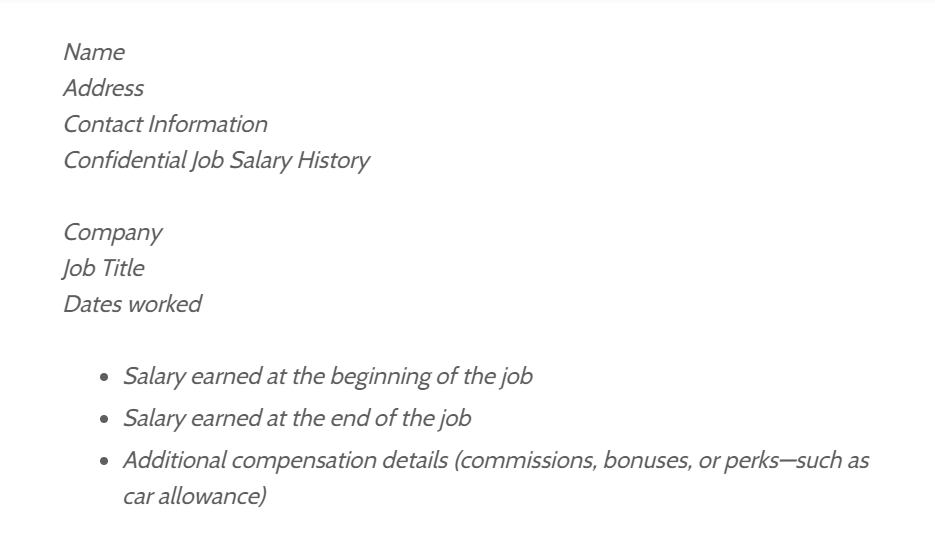
Continue to list any job you’ve worked that you’d like to add. If you don’t want to list one because it’s a temporary job or pays less than average, you can leave it off. If you included a company in your application, CV, or resume, you may be required to submit pay information for that employment.
If you’re not comfortable giving an actual income, you can use this template to indicate a range.
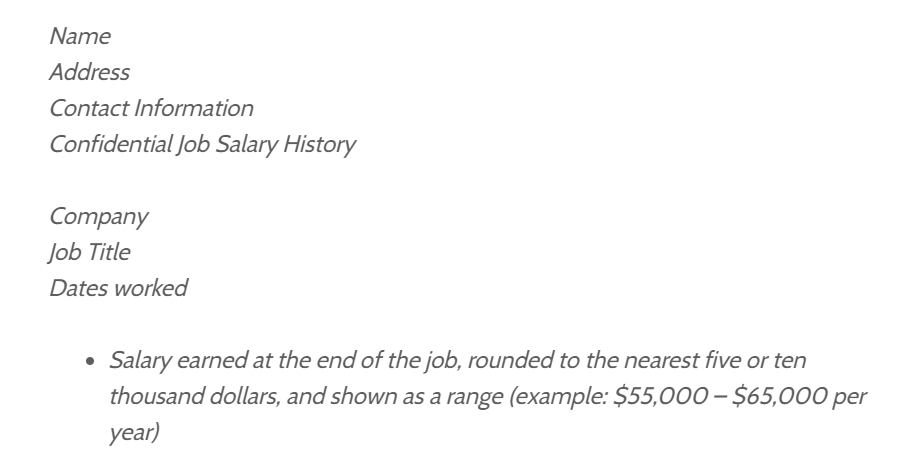
If there is a significant gap between your starting point and your earnings when you leave a position, feel free to specify the amount you wish to be considered in your job offer.
Is it legal for employers to request a salary history?
It is not always legal for a future employer to obtain a salary history. Those who can lawfully do so cannot utilise it for discriminatory employment practices. If you are unsure if you are required to provide this information or if you are concerned that this inquiry will be used for discriminatory hiring practices, contact your state or municipal labour office for more information on what is authorised by law.
Conclusion
At the end of the day, remember that if the company makes you an offer, you are still in a position to negotiate. What you state in the interview isn’t necessarily concrete – but don’t go so far in the other direction during negotiations either! This will just waste everyone’s time.
Good luck!
Got a figure in mind that you want to earn? Search available jobs here by salary and start applying!
FAQ on Ways to share the Salary History
Q 1: Should I share my salary history with employers?
Ans: It is generally not recommended to share your salary history with employers, as it can limit your negotiation power and potentially lead to being offered a lower salary. Instead, focus on discussing your desired salary based on your skills, experience, and the market value for the position.
Q 2: What are alternative ways to discuss salary expectations with employers?
Ans: Instead of sharing your salary history, you can research the market value for the position and use that information to provide a salary range or discuss your salary expectations based on your qualifications and the responsibilities of the role.
Q 3: How can I deflect questions about my salary history?
Ans: Politely redirect the conversation by emphasising your qualifications and the value you can bring to the company. You are more interested in discussing the potential salary for the position based on your skills and experience.
Q 4: Can sharing my salary history negatively affect my future earnings?
Ans: Yes, sharing your salary history can limit your earning potential. If employers base their offers on your previous salary, it may prevent you from receiving a higher salary that aligns with your current market value and experience.
Q 5: What if an employer insists on knowing my salary history?
Ans: If you find yourself in a situation where an employer insists on knowing your salary history, consider providing a salary range based on the market value for the position. This allows some flexibility while avoiding sharing specific past earnings.
| Related Topics | |
|---|---|
| Salary negotiation tips for working mums | Salary Negotiation Benefits |
| Smart ways for millennials to up their salary negotiations | Do You Know About These Five Negotiation No-Nos? |
 Beware of Scammers
