
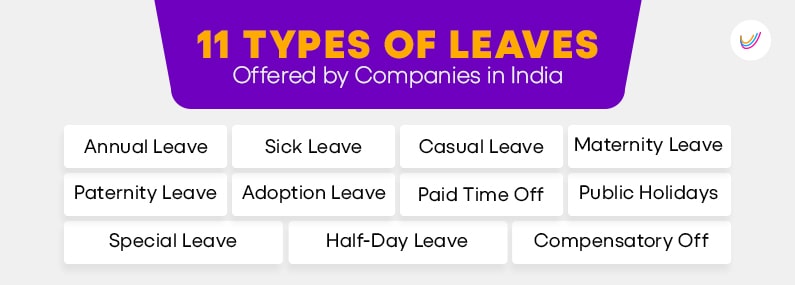
Most companies today offer different types of leave to help employees manage their personal, medical, and family needs without affecting their work-life balance.
A clear and well-structured leave policy also helps maintain transparency and supports a healthier, more productive workplace.
Understanding the various leave types in a company, such as casual leave, sick leave, earned leave, maternity leave, and other statutory leave categories, allows employees to plan their time better and stay informed about their entitlements under company leave rules.
This article explains the 11 most common types of leave offered by companies in India, along with their purpose and benefits.
Whether you are joining a new organisation or reviewing your current company’s leave policy, this overview helps you understand each leave type clearly.
Common Leave Types in Corporate
These are the day-to-day office leave types that most employees use for planned breaks, short emergencies, and regular personal or professional needs. They help maintain work-life balance while keeping work schedules predictable.
1. Annual Leave
Annual leave (also known as earned leave or paid vacation) is one of the most common types of leave offered by companies in India. Employees accumulate these days over the year and can use them for vacations, family time, personal commitments, or rest. It encourages better work-life balance and helps employees return to work refreshed.
| Leave Type | Annual Leave / Earned Leave |
| Purpose | Used for planned holidays, travel, family time, or personal breaks |
| Eligibility | Full-time employees; leave accrues monthly as per company policy |
| Paid/Unpaid | Paid |
2. Sick Leave
Sick leave is granted when an employee is unwell, injured, or needs medical care. It helps maintain a healthy workplace by allowing employees to recover without working through illness.
| Leave Type | Sick Leave |
| Purpose | Illness, medical treatment, recovery |
| Eligibility | As per company/State Shops & Establishment Act |
| Paid/Unpaid | Usually paid |
3. Casual Leave
Casual leave is designed for unplanned situations such as emergencies, urgent personal matters, or same-day requirements. It offers flexibility when employees need sudden time off.
| Leave Type | Casual Leave |
| Purpose | Urgent personal tasks, unforeseen situations |
| Eligibility | All employees; number of days varies by organisation |
| Paid/Unpaid | Usually paid |
4. Public Holidays
Public holidays include national, state-specific, and festival holidays declared by the government. Companies must provide these days off as part of statutory compliance.
| Leave Type | Public Holidays |
| Purpose | National/festival holidays observed by law |
| Eligibility | All employees |
| Paid/Unpaid | Paid |
5. Half-Day Leave
Half-day leave allows employees to take time off for appointments, urgent commitments, or partial-day requirements. It offers flexibility without affecting a full day of attendance.
| Leave Type | Half-Day Leave |
| Purpose | Appointments, short errands, mid-day commitments |
| Eligibility | All employees; subject to manager approval |
| Paid/Unpaid | Paid (usually counted as 0.5 day) |
6. Compensatory Off (Comp-Off)
Compensatory Off is granted when employees work on weekends, company holidays, or extended hours. It ensures fair compensation by offering equivalent paid time off later.
| Leave Type | Compensatory Off |
| Purpose | Time off in return for overtime or holiday work |
| Eligibility | Employees who work beyond regular hours or on holidays |
| Paid/Unpaid | Paid |
7. Paid Time Off (PTO)
PTO combines different leave categories—such as casual, earned, and sick leave—into a single flexible bank. Employees can use these days for any personal, medical, or professional need without providing detailed reasons.
| Leave Type | Paid Time Off (PTO) |
| Purpose | Flexible leave for any personal or health reason |
| Eligibility | Full-time employees; varies by company |
| Paid/Unpaid | Paid |
Specialized and Event-Based Leaves
These leave types are linked to major life events such as childbirth or adoption. They are usually governed by specific laws or detailed company policies and provide additional protection and support to employees.
8. Maternity Leave
Maternity leave provides job-protected leave for women during pregnancy and after childbirth. It ensures both mother and baby have adequate care and recovery time. Under the Maternity Benefit Act, eligible women receive 26 weeks of maternity leave.
| Leave Type | Maternity Leave |
| Purpose | Childbirth, recovery, newborn care |
| Eligibility | Female employees as per Maternity Benefit Act, 1961 |
| Paid/Unpaid | Paid |
9. Paternity Leave
Paternity leave allows new fathers to support their partner and care for their newborn. While not legally mandated in all sectors, many modern organisations now offer this benefit for better family bonding.
| Leave Type | Paternity Leave |
| Purpose | Support partner, care for newborn |
| Eligibility | Male employees; duration varies across companies |
| Paid/Unpaid | Partially or fully paid depending on policy |
10. Adoption Leave
Adoption leave is provided to employees who legally adopt a child. It offers time to settle into new family routines and ensure the child adjusts comfortably.
| Leave Type | Adoption Leave |
| Purpose | Bonding and adjustment after adoption |
| Eligibility | Employees who legally adopt a child |
| Paid/Unpaid | Paid or unpaid based on company policy |
11. Special Leave
Special leave covers exceptional circumstances such as bereavement, exams, higher studies, emergencies, or personal reasons that do not fall under standard leave categories. Policies vary widely across companies.
| Leave Type | Special Leave |
| Purpose | Exceptional situations like bereavement, study, emergencies |
| Eligibility | Based on company-specific guidelines |
| Paid/Unpaid | Paid or unpaid depending on the type |
Also Read:
| How to Write Casual Leave Application for Office | Leave Application for Sister’s Marriage |
| How to Write Leave Extension Letter | Leave Application for Vacation in Office |
Other Leave Types
In addition to the standard leave categories, many organisations provide additional leave options to support employees during significant life situations, personal development goals, or civic responsibilities. These leave types are not used frequently but play an important role in employee welfare.
- Bereavement Leave : Granted when an employee loses an immediate family member. It allows time for mourning, attending rituals, and managing family responsibilities.
- Marriage Leave : Leave provided for an employee’s own marriage or to participate in the wedding of a close family member. The duration varies by company policy.
- Sabbatical Leave : Long-term leave granted for professional research, higher education, personal development, career breaks, or health recovery. Typically offered to long-tenured employees.
- Study Leave : Leave granted to pursue academic courses, certifications, or upskilling programs that benefit an employee’s career progression.
- Election / Voting Leave : Short leave given to employees to cast their vote during national, state, or local elections, ensuring they fulfil their civic duties.
- Religious or Festival Leave : Optional holidays (also known as restricted holidays) for observing culturally significant festivals based on individual preference.
- Jury Duty Leave : Though rare in India, some multinational companies offer leave if an employee is summoned for jury duty or legal obligations abroad.
- Emergency Leave : Leave granted to manage urgent and unforeseen circumstances such as natural calamities, accidents, or sudden family crises.
Conclusion
Knowing the different types of leave offered by companies helps employees plan their time confidently and maintain a healthy work-life balance. Each leave category supports a specific need, whether it’s medical recovery, family responsibilities, personal commitments, or long-term development.
A transparent leave policy also benefits organisations by improving productivity, reducing burnout, and creating a supportive workplace culture. By understanding the full range of leave options, employees can make informed decisions and use their entitlements responsibly.
If you’re reviewing your company’s policy or preparing for a new role, keep this guide handy as a quick reference to the leave types available in most organisations across India.
People Also Read:
| Leave Application for Brother’s Marriage | Medical Leave Application for Office |
| Leave Application for Marriage | Sabbatical Leave Meaning |
FAQs on Types of Leaves in India
Q1. What are the main types of leaves offered by companies in India?
Most organisations offer a mix of statutory and company-specific leaves. Common categories include casual leave (CL), sick leave (SL), earned/annual leave (EL), public holidays, maternity leave, paternity leave, and compensatory off (Comp-off). Some companies also provide options like study leave, marriage leave, bereavement leave, and sabbatical leave based on internal policies.
Q2. How many sick leaves are employees generally entitled to?
Employees typically receive 6 to 12 days of sick leave per year, depending on the company’s leave policy and State Shops & Establishment Act. Sick leave covers illness, injury, medical check-ups, and short recovery periods.
Q3. How does maternity leave work in India?
Under the Maternity Benefit Act, 1961, eligible women employees are entitled to 26 weeks of paid maternity leave for their first two children. For the third child and onwards, the entitlement is 12 weeks. This leave supports childbirth recovery, pre-natal care, and newborn care.
Q4. Do companies in India offer paternity leave?
Many private companies now offer paternity leave, usually ranging from 5 to 14 days, allowing new fathers to support their partner and bond with their newborn. It is not a statutory requirement but is increasingly common.
Q5. What is the difference between casual leave and PTO (Paid Time Off)?
Casual leave is used for short, urgent personal needs or same-day requirements. PTO, however, combines multiple leave types—such as casual, earned, and sick leave—into one flexible pool of paid days off without the need to specify a reason.
Q6. Can employees take study leave in India?
Yes. Many employers allow study leave for further education, exam preparation, certification courses, or upskilling programmes. Depending on the policy, study leave may be paid or unpaid.
Q7. What is compensatory off (Comp-Off)?
Comp-off is given when employees work beyond their normal schedule, on weekends, or on public holidays. Instead of paying overtime, companies provide equivalent paid time off that employees can use later.
Q8. Do companies allow half-day leave?
Yes. Most organisations permit half-day leave for short personal commitments, appointments, or mid-day emergencies. It is counted as 0.5 day and usually requires approval from the reporting manager.
Q9. What is bereavement leave?
Bereavement leave is provided when an employee loses an immediate family member. It allows time for funeral rituals, mourning, and supporting the family. The duration varies from 3 to 7 days depending on company policy.
Q10. What is Leave Without Pay (LWP) or Loss of Pay (LOP)?
LWP/LOP is leave taken when an employee has exhausted all paid leave but still requires time off. LWP days are unpaid and may impact monthly salary and attendance-linked benefits.
Q11. Can an employee combine different types of leave?
Yes. Many companies allow employees to combine casual leave, earned leave, and LWP based on the situation. Combinations must comply with company policy and require prior approval.
Q12. What is a restricted or optional holiday?
A restricted/optional holiday is a holiday employees may choose based on personal or religious preferences. Organisations typically offer a list of optional holidays annually, and employees can select 1–3 days from this list.
Related Articles: