
Mistakes at work are more common than we like to admit. A missed deadline, a wrong email, or a poor choice of words can affect trust and professional relationships. In such moments, knowing how to write an apology letter the right way can help address the issue calmly and responsibly. A well-crafted apology shows accountability without sounding defensive or overly emotional.
learn how to write a professional apology letter that feels genuine, not scripted. From apologising to a manager or colleague to sending an apology letter for mistake to a client, the formats and samples shared here help you express regret clearly while maintaining professionalism.
The article also includes practical steps, simple formats, and real apology letter samples for common workplace scenarios. Along with examples, you’ll find useful dos and don’ts that reflect what employers and workplace professionals generally expect from a sincere apology.
What is an Apology letter?
A formal apology letter is a written note where you admit what went wrong and say sorry in a clear and respectful way. It is usually used when the mistake is serious and a spoken apology does not feel enough, especially at work..
This kind of professional apology message is often sent to a manager, team lead, colleague, or even a client. The tone depends on the relationship, but the goal stays the same: take ownership, acknowledge the impact, and promise it won’t repeat.
In most work settings, a sincere apology letter serves a few key purposes:
- Formally accept responsibility for a mistake or oversight
- Show empathy and understanding of the inconvenience caused
- Clarify the situation (without trying to justify it)
- Demonstrate maturity by committing to avoid a repeat
Writing an apology letter isn’t about being overly emotional. It’s about communicating honestly and respectfully, especially when your actions have affected someone else’s work, time, or trust. A short, well-structured apology can leave a lasting impression.
When should you write an apology?
There are moments at work when a simple “sorry” said in passing doesn’t cut it. A formal apology letter becomes necessary when the mistake affects your team, client, or organisation in a meaningful way—either operationally or interpersonally.
You might need to write one in situations like:
- Missing a deadline that delayed a team deliverable or client milestone
- Sending incorrect information in reports, emails, or presentations
- Unprofessional behaviour in a meeting or public setting
- Miscommunication that created confusion or conflict
- Failing to follow up or respond in a timely manner to important requests
In such cases, a written apology shows that you’re taking the issue seriously. It helps reset expectations and gives the other person a moment to understand your side, without excuses.
Even if you’ve already spoken to the person, a sincere apology letter acts as a written record and can help repair trust over time. It also reflects accountability in a professional setting.
Steps to write an apology letter
Whether you’re apologising to a client, colleague, or your manager, the key is to strike a balance between professionalism and empathy. Here’s a simple 6-step structure to follow when crafting a sincere apology letter or email at work:
- Start with a clear subject or opening: Get to the point early. For email, your subject line could read: “Apology for Delay in Report Submission” or “Sincere Apology Regarding Miscommunication.”
- Address the recipient professionally: Use appropriate salutations like “Dear Mr. Tan” or “Hello Michelle” depending on your workplace culture.
- Acknowledge the mistake directly: Be clear and avoid deflecting. For example: “I realise I missed the deadline for the quarterly presentation.”
- Take responsibility: Avoid blame. Say “I should have clarified the expectations earlier,” rather than “No one told me.”
- Explain — but don’t over-justify: A brief context helps, but don’t let it become an excuse. The goal is to show accountability, not to defend yourself.
- Offer a solution or next step: Suggest how you’ll make up for the mistake or prevent a repeat. End with a note of gratitude for their understanding.
This structure works whether you’re writing a long formal apology email to your manager or a short apology to a client.
Apology Letter Format?
If you’re unsure how to structure your message, use this tried-and-tested apology letter format. It works for both physical letters and emails.
Key Elements to Include in an Apology Letter
- Date: Mention the date at the top for printed letters; optional for emails.
- Recipient’s name and designation: Include the full name, job title, and company name.
- Salutation: Use a polite greeting, such as Dear Mr Sharma, Dear Ms Lim, or Dear Team.
- Subject line (for email): Keep it clear and specific, for example: Apology for Missing the Meeting on 13 July.
- Opening paragraph: Clearly state that you are writing to apologise for the mistake.
- Body of the letter: Briefly explain what went wrong and accept responsibility without making excuses.
- Solution or corrective step: Mention how you are fixing the issue or avoiding it in the future.
- Closing paragraph: Express regret again and thank the recipient for their understanding.
- Sign-off: Use a professional closing, such as Yours sincerely or Best regards, followed by your full name and designation.
| Simple Apology Letter Format To, [Recipient’s Name] [Designation] [Company Name] Subject: Apology for [Brief Reason] Dear [Recipient’s Name], I am writing to sincerely apologise for [mention the mistake briefly]. I take full responsibility for the error and understand the inconvenience it caused. I have taken steps to [mention corrective action] and will ensure this does not happen again. Thank you for your understanding. Yours sincerely, [Your Full Name] [Your Designation |
This professional apology layout keeps things simple, but personal. Avoid copying templates word for word — tweak them to suit the situation and your relationship with the recipient.
💡 Pro Tip: Read your draft aloud before sending. If it sounds defensive or vague, rewrite. Sincerity shows up more in plain, direct language than in fancy words.
Apology Email or Apology letter: which works better?
Should you send a formal apology letter or just write a quick email? The answer depends on your workplace culture, the severity of the mistake, and how quickly you need to respond.
If time is of the essence or if you’re dealing with colleagues who prefer digital communication, an apology email is usually fine. But for matters involving senior stakeholders, clients, or sensitive business issues, a printed formal apology letter may feel more respectful.
Here’s a quick comparison to help you decide:
| Apology Email | Printed Apology Letter |
|---|---|
| Best for quick, direct communication | More impactful for serious or formal issues |
| Used in fast-paced or remote work setups | Ideal in traditional or high-level business environments |
| Suitable for day-to-day errors | Used for major missteps or public errors |
| Easy to track and follow up | Shows more effort and gravity |
💡 Pro Tip: When sending an apology email, make the subject line clear and specific — don’t leave it vague or bury the purpose.
Tips for Writing an Effective Apology Letter for a mistake
A poorly written apology can make things worse. A strong one, on the other hand, can reset expectations and repair professional relationships. Here are a few practical tips to help your apology sound sincere and professional:
- Take ownership immediately: Avoid shifting blame or being vague. Own the mistake with clarity.
- Keep it short and respectful: Get to the point without rambling or over-explaining.
- Use a professional tone: Even when apologising to peers, avoid informal language.
- Acknowledge the impact: Show you understand how your actions may have affected the team or project.
- Offer a next step: Share how you’ll avoid the same issue going forward — it makes your apology more credible.
Remember: sincerity matters more than sounding perfect. You’re not trying to impress — you’re trying to take responsibility in a way that rebuilds trust.
💡 Pro Tip: If your mistake caused project delays, mention how you’ll mitigate its effects, people appreciate solutions more than promises.
Apology letter samples for Workplace
Below are real-world examples of formal apology letters used in workplace situations. These samples show how to write an apology letter in a professional setting and can be adapted based on your role, tone, and level of responsibility. They are suitable for employees, team leads, and interns.
The examples cover common scenarios such as:
- Apology letter for mistake at work to boss
- Apology letter to manager
- Apology letter for taking leave without permission
- Apology letter for leave without prior information
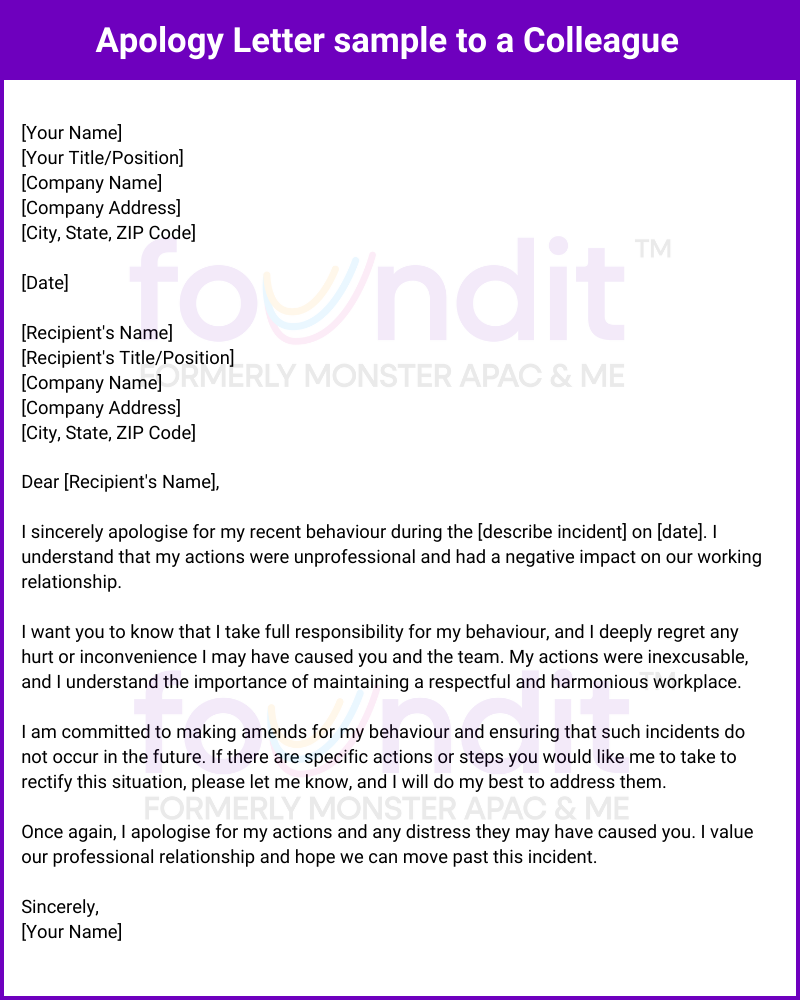
Sample 1: Apology Letter Sample to a Colleague
In this behavior apology letter format to a colleague, discover how to express sincere remorse for unprofessional behaviour and take responsibility for actions in a workplace context.
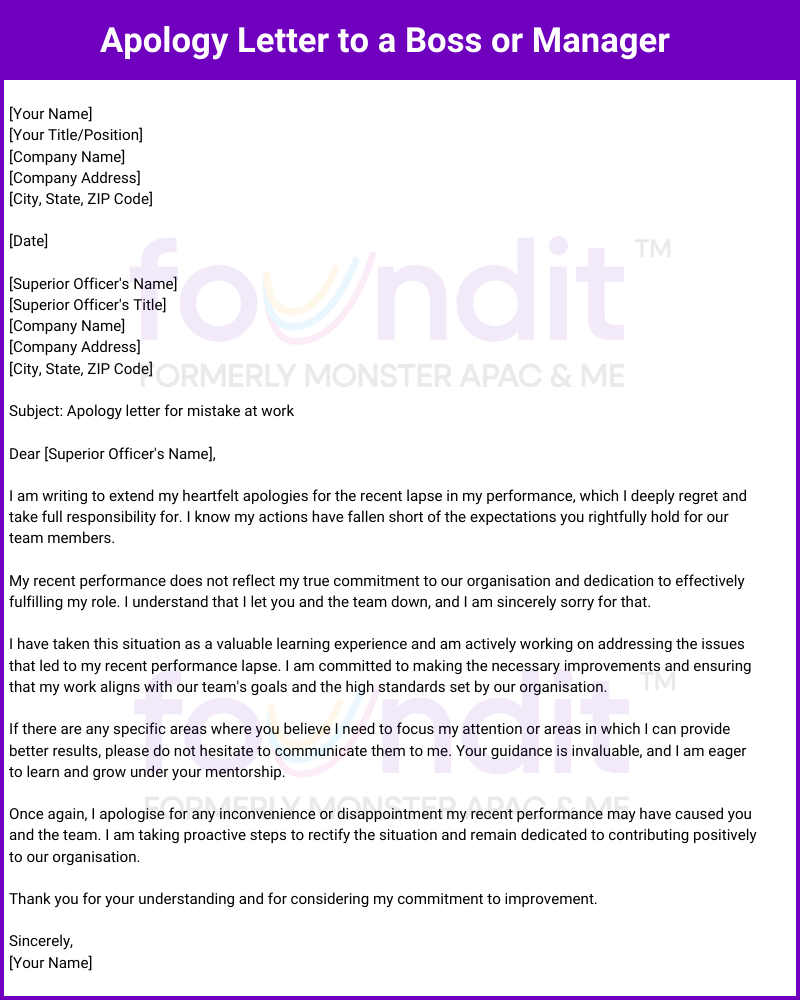
Sample 2: Apology Letter to a Boss or Manager
Here is a apology letter for mistake at work to boss or manager:
Conclusion on Apology Letter Tips
Writing a work apology letter or a behaviour apology letter is a skill that can help repair relationships, both in personal and professional settings. Remember, a sincere and well-constructed short apology letter can go a long way in resolving conflicts and demonstrating your commitment to personal growth and improvement.
FAQs about apology letters
🔽 When should I send a short apology letter at work?
Send a short apology letter as soon as you realise the mistake, especially if it affects deadlines, a client, or your team. Acting quickly reduces confusion and shows responsibility.
🔽 Should I apologise over email or in person?
If it is urgent or minor, an apology email is usually enough. For serious issues, apologise in person first (or on a call) and follow up with a written apology for record and clarity.
🔽 What tone should I use in a workplace apology letter?
Keep it professional, calm, and respectful. Admit the mistake clearly, avoid excuses, and focus on the next steps.
🔽 Is it okay to apologise via WhatsApp or Slack?
For small day-to-day slips, a quick message on WhatsApp or Slack can work. For anything that impacts work output, timelines, or clients, use a formal apology email or letter.
🔽 How long should a formal apology letter be?
Keep it short and direct, usually one to two brief paragraphs. Mention what happened, apologise, and state the correction or prevention step.
🔽 How do you write a good apology letter for mistake?
A good apology letter for mistake should clearly admit the error, express regret, take responsibility, and mention what you will do to fix it or avoid repeating it.
Related Articles: