
Wondering how to write a leave application for office? Writing a clear and polite leave application letter helps your manager understand your reason for absence and approve your request quickly. A good leave application for office shows that you respect workplace rules and plan your leave responsibly.
Many employees are unsure about the right leave application format for office. They often ask what to write first, how formal it should sound, or how to send it by email. This article explains every step of writing a professional leave application letter and includes practical examples you can use for different situations.
Here, you will learn how to write a leave application for office in a simple format, the correct way to address your manager, and the words to use for each type of leave. By the end, you will be able to create a short and effective leave letter format for office that fits any reason or duration of leave.
Let us start by understanding what a leave application letter means and why it is important in any workplace.
- What is a Leave Application Letter?
- Why is Writing a Leave Application Important?
- Types of Leave Letter Applications
- Office Leave Application Format (Letter Style)
- Leave Application Mail Format
- Leave Application Samples
- Dos and Don’ts of Leave Applications
- Pro Tips: How to Write a Leave Letter That Gets Approved
- Understanding the Company Leave Policy
- Final Words
- Frequently Asked Questions (FAQs)
What is a Leave Application Letter?
A leave application letter is a simple, formal request you send to inform your employer that you’ll be away from work for a specific period. It may be for a few hours, a few days, or a longer stretch depending on your reason. Most companies expect a short, polite leave application for office written in a clear format that includes your dates, reason, and contact details.
Some offices prefer a printed note in a standard leave letter format for office, while others accept a short email. Either way, the purpose is the same, you’re requesting approval for your absence and helping your manager plan work in your absence.
A clear and well-written leave application letter not only improves the chance of approval but also reflects that you handle your responsibilities with care. When you use the correct leave application format for office, it becomes easier for HR to track leaves and for your team to stay organised.
Keep the tone polite and to the point. You don’t have to sound overly formal; just ensure the message is clear, respectful, and includes the key details your manager needs.
Why is Writing a Leave Application Important?
A proper leave application for office helps your manager and team plan work smoothly when you are away. It prevents delays, confusion, and missed deadlines. Writing a clear leave request or leave letter shows you are responsible and professional.
It also gives HR a record for attendance and pay. Using the right leave application letter or leave application format for office with dates and reason makes approval quick and easy.
Types of Leave Letter Applications
There’s no single way to write a leave application, because reasons for taking time off vary from person to person. Still, every leave application letter follows a simple structure, it mentions the reason, duration, and contact details. Here are the most common types of leave applications and when to use them:
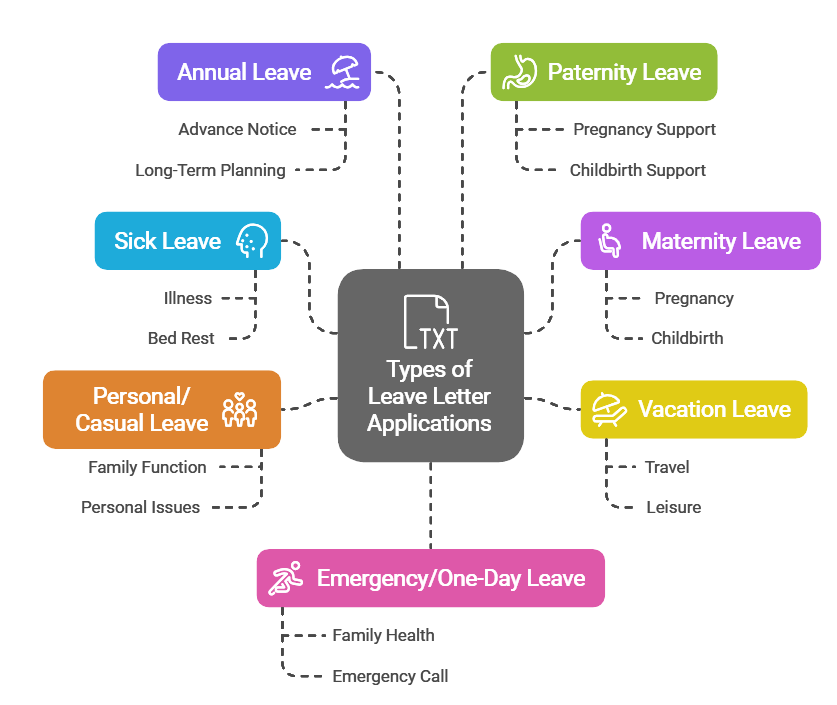
Sick Leave – On one of those days when you wake up and instantly know that you won’t be able to make it out of your bed due to illness, you write the sick leave application to your employer.
Maternity Leave – There comes a time in every professional woman’s life when she applies for maternity leave. This is when she is expecting a baby or has just conceived. This kind of leave should be pretty much applied beforehand.
Vacation Leave – We all need short breaks from our busy, hectic lives to spend some quality time with our loved ones away from the hustle-bustle of the city. Vacation Leave, as the name states, is taken when you are off on vacation.
Personal/Casual Reasons Leave – Personal or Casual leave application written on days when there is a family function you attended or some other issue you have to address.
Annual Leave – Annual leave applications are written when one is required to leave long-term. It is better to inform the office about these kinds of leave well in advance.
Paternity Leave – Paternity leaves are taken by husbands when their wives are either in the final stages of pregnancy or have just conceived a baby. The number of leave days must be mentioned beforehand.
Emergency/One-Day Leave- In cases of immediate urgency, emergency or one-day leave applications are given on short period notice. Be it some family members’ poor health condition or an emergency out-of-station call, we all have our issues to attend to.
Also Read:
| Maternity Leave Application | Forced to forgo an optional leave? |
| What is Privilege Leave? | Leave Travel Allowance (LTA) |
Office Leave Application Format (Letter Style)
If your company still prefers written letters or PDFs, here’s what the typical leave application format looks like:
What to include in a leave application for office?
Here’s a detailed list of things you should add to your leave application letter to make your leave request get accepted instantly. Below is the leave letter format for offices:
- Recipient’s Details: Start with the name and job title of the person you’re writing to.
- Subject Line: Something simple, like “Leave Application for Medical Reason.”
- Salutation: Use “Dear” followed by their name or designation.
- Main Body: Explain the reason for your leave, the dates you’ll be away, and (if applicable) who will cover for you.
- Gratitude: A short “Thank you for considering my request” works well.
- Closing: Use a polite sign-off like “Sincerely” or “Regards.”
- Your Name and Designation: Optional, but it adds clarity.
This office leave application format is formal without being stiff, and it keeps everything clean and readable.
Leave Application Mail Format
In most companies now, especially remote-first ones, a leave request mail to manager is more common than printed letters. The tone should still be professional, just more conversational.
What to include in a leave application for office in email format?
While you write your leave application email to your boss, here are certain things you must not forget to add to your mail.
- Here’s what to include:
- Subject Line: Mention the leave clearly, e.g., “Request for Leave: June 18–20”
- Greeting: Start with “Hi [Name]” or “Dear [Manager’s Name]”
- Body: Briefly share the reason, leave dates, and who’s covering your responsibilities, if needed
- Thanks: Always include a thank-you sentence
- Sign-off: Keep it simple with “Best,” “Thanks,” or “Regards,” followed by your name
Even if your team is casual, it’s always better to have a leave application email format you stick to. It keeps communication clear and avoids misunderstandings.
Also Read: Asking for leaves this holiday season? Here’s how to go about it
Leave Application Samples
Writing from scratch can be tricky when you’re short on time. Here are a few common examples to help you structure your own leave application:
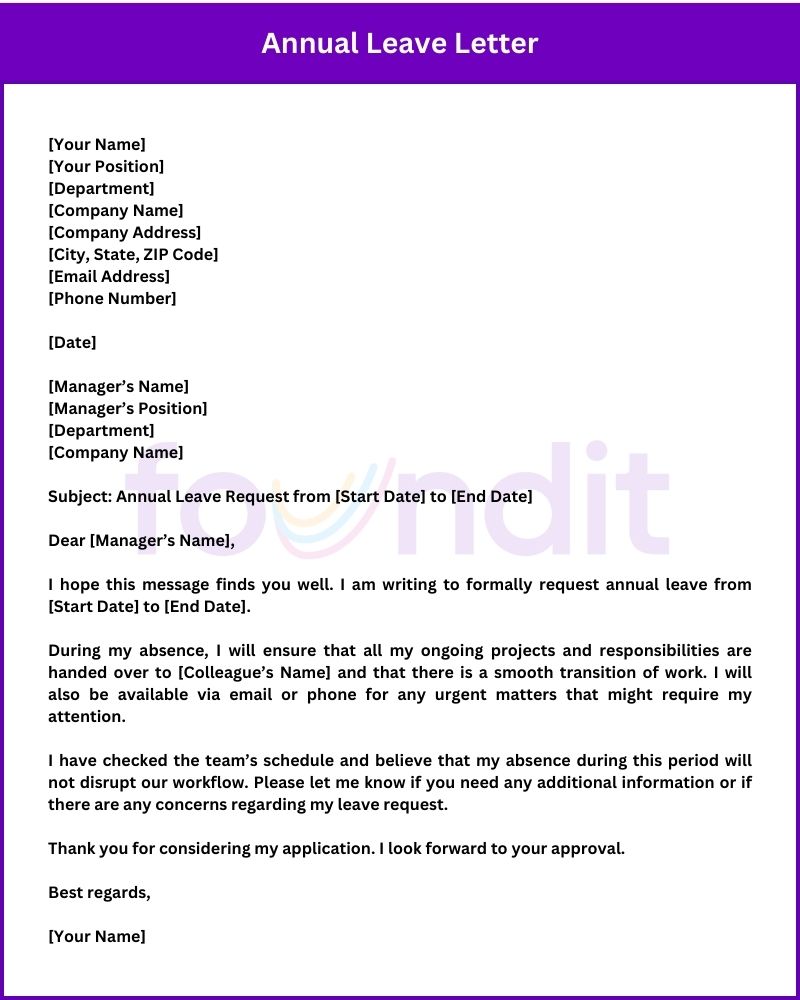
1. Annual Leave Application:
These leave applications are written when one requires a year or months-long break from work. There can be various reasons why one would want to take a yearly break, as it could be for pursuing some higher education, marriage, other work-related reasons, or any other personal reason.
2. Sick Leave Application:
These letters or emails are written when you need leave from the office when you can’t work due to illness. It is necessary to write about the cause of illness and how long it would take for your recovery. Some offices make it mandatory to attach hospital bills as proof of your sick leave application.
Different companies have various protocols to be followed while asking for sick leave. These kinds of leaves are usually covered under the sick leaves provided by the company leave policy.
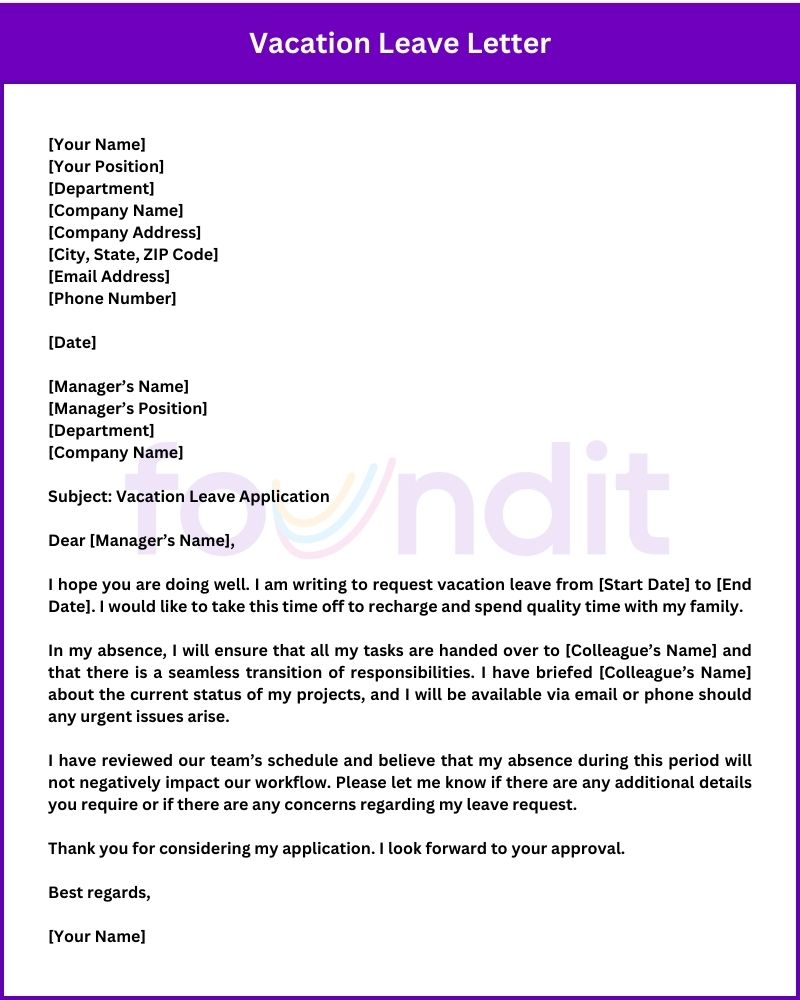
3. Vacation Leave Application
Casual or Vacation Leave is taken when you need a break from the office. Taking a break from work once in a while also helps increase productivity, and that is why the company provides a certain number of days in a year as casual leave days under its company leave policy. The format below must be followed while writing your leave application letter/mail to your manager.
4. Maternity Leave Application:
These leaves are taken when a woman is in her last stages of pregnancy or has already given birth to a child. Every organization has specific protocols to be followed under maternity leave. It has to be informed well about maternity leave as it takes off from long-term work.
Apart from women, men also take leaves to care for their newborns, categorized as paternity leaves. As seen below, this is the format of the leave application for maternity leaves taken in the office.
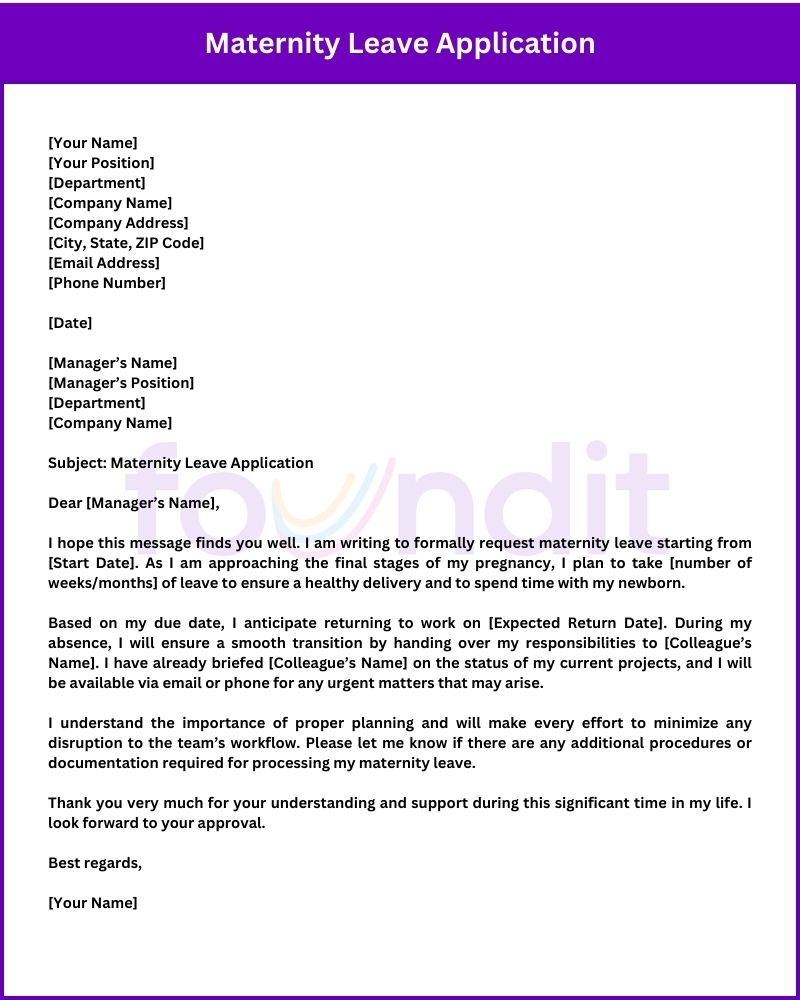
Numerous other types of letters exist, such as emergency leave, one-day leave, half-day leave, personal reason leave, etc. You need to follow the same format as mentioned above, regardless of whether it is a written letter or a mail. The fundamental aspects remain the same for every kind of letter except the cause.
Tip: Always adjust the tone and details depending on your workplace norms
Also Read: 7 time-saving secrets to help you leave office on time
Dos and Don’ts of Leave Applications
Here’s a quick table of what to keep in mind:
These small details often decide how your request is received.
| ✅ Do’s | ❌ Don’ts |
| One must use appropriate language and make the outlook of the letter/mail professional. | Don’t use informal language while writing your leave application letter/ mail to your manager/boss. |
| Write the recipient’s address directly at the beginning of the letter. | Don’t insert headings such as To and From before writing the sender and receiver’s address. |
| Always thank the recipient at the end of the letter. | Don’t forget to mention the number of days and the particular dates you wish to take off from work. |
Pro Tips: How to Write a Leave Letter That Gets Approved
- Don’t overthink it, but do plan it. You don’t need fancy words, just clarity.
- Make your reason clear. Even if it’s personal, a short line is enough.
- Mention what you’ve arranged. Whether it’s delegating tasks or checking emails occasionally, it helps.
- Avoid guilt language. Asking for leave is normal. You don’t need to apologise unless it’s last-minute.
- Check for errors. A typo in dates or names can create more confusion than you think.
You don’t have to get it perfect. You just have to get it across.
Related Read:
| Leave Application for Marriage | Sabbatical Leave Meaning |
| What is Bereavement Leave | Maximising Your Annual Leave |
Understanding the Company Leave Policy
Before sending your leave application, it’s good to check your organisation’s leave rules. Every company has a different policy—some allow casual leave on short notice, others expect two weeks’ notice even for a day off.
Usually, the leave policy will tell you:
- How many types of leave you’re allowed (sick, earned, casual)
- How to apply (letter, email, internal portal)
- Whether documentation is needed
- Who approves what
Even the most well-written leave letter won’t help if you’re breaking policy. So it’s always worth taking a look first.
Final Words
Writing a leave application isn’t just about formality. It’s about communicating clearly, respecting your team’s time, and being responsible for your work.
If you’re unsure how to write a leave letter, don’t overthink it. Focus on clarity, tone, and the basics—reason, dates, and plan. That’s really all your manager needs.
A little care in how you write your leave request mail to manager can make the process smoother for everyone involved.
FAQs on Office Leave Application Writing Guide
1. How do I write a simple leave application for office?
A simple leave application for office should include your reason for leave, the duration, and a polite closing note. Keep it short and professional. Whether you send it by email or as a leave application letter, make sure it is clear and easy to read.
2. Can I send a leave request by email or is a formal letter needed?
Many companies now accept a leave request mail to manager, especially for short leaves. However, for longer absences such as maternity or annual leave, some organisations still prefer a printed leave letter format for office for documentation.
3. What is the correct format for a leave application?
The proper leave application format for office includes a subject line, greeting, reason, start and end dates, and a short closing. This format can be used for both printed leave letters and email versions.
4. Should I mention the reason for my leave?
Yes, always mention it briefly. Your leave application or leave request should explain if it’s for health, travel, or a personal matter. If it’s private, write “personal reasons” without giving too many details.
5. What if I need emergency leave and don’t have time to write an application?
In urgent cases, inform your manager through a call or text first. Once things settle, send a short leave application for office or follow-up email so your absence is officially recorded by HR.
6. Is it necessary to mention who will handle my work while I’m on leave?
It isn’t compulsory, but it helps. Adding this detail in your leave application letter shows planning and responsibility. It also makes it easier for your manager to approve the leave request quickly.
7. Can I apply for leave without checking my remaining balance?
It’s best to check your leave balance first. If your leave application for office goes beyond your available days, it might count as unpaid leave. Always confirm before submitting your leave letter.
8. How can I improve my chances of quick approval?
Write your leave application for office in advance, use the proper leave application format, and keep it polite. A well-structured leave letter format for office makes a strong impression and speeds up approval.
Related Articles :